Your patio looks inviting—until the sun turns it into a scorching frying pan. Standard umbrellas fade, warp, or collapse under real-world conditions. And “UV resistant” labels? Often just marketing fluff. The solution isn’t more shade—it’s smarter shade.
The Hidden Flaw in Most UV Resistant Patio Umbrellas
Manufacturers love slapping “UV resistant” on polyester canopies treated with a cheap coating that washes off after two rainy seasons. These fabrics block maybe 70% of UV initially—then degrade fast. Worse, they offer zero heat reflection. So you’re shaded, but still baking in infrared radiation.
And most frames? Aluminum or steel that corrodes, joints that seize, and tilt mechanisms that jam after six months. You paid for protection—but got a sun-bleached liability.
How to Choose and Maintain a Truly Effective UV Resistant Patio Umbrella
Material Matters More Than You Think
Look for solution-dyed acrylic (like Sunbrella®) or marine-grade polyester with embedded UV inhibitors—not surface coatings. These retain color and UV-blocking power for 5+ years. Acrylic also breathes better, reducing heat buildup underneath.
Cantilever Design: Less Obstruction, More Coverage
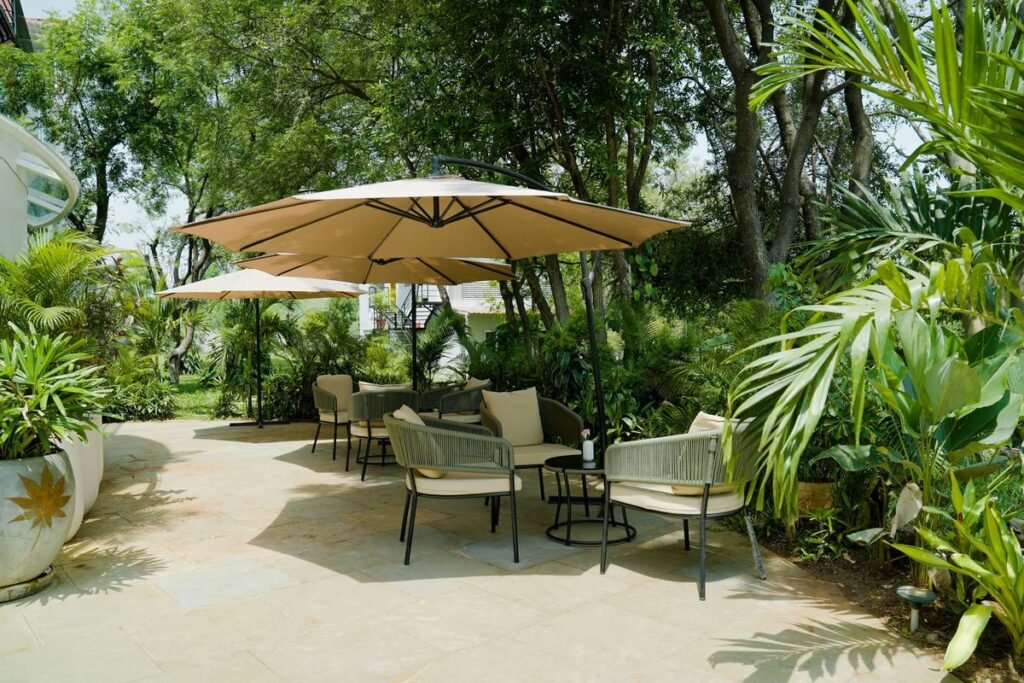
A cantilever umbrella offsets the pole to the side, freeing your table from a center mast. But not all are equal. Seek reinforced aluminum arms with powder-coated finishes and 360° rotation. Avoid plastic hinges—they crack in freeze-thaw cycles.
Maintenance That Actually Extends Lifespan
Rinse monthly with mild soap. Never store wet. Retract during wind gusts over 20 mph. And re-tension canopy screws every spring—loose fabric flaps, frays, and fails faster.
| Feature | Budget Option (<$150) | Mid-Tier ($150–$400) | Premium (>$400) |
|---|---|---|---|
| Fabric Type | Coated polyester | Marine-grade polyester | Solution-dyed acrylic |
| UV Protection Duration | 6–12 months | 2–3 years | 5+ years |
| Frame Material | Painted steel | Powder-coated aluminum | Anodized aluminum + stainless hardware |
| Wind Resistance | Poor (fails at 15 mph) | Moderate (handles 20–25 mph) | Engineered for 30+ mph with vented canopy |
The Industry Secret Nobody Talks About: It’s Not Just UV—It’s Total Solar Reflectance
Here’s what top outdoor designers know: blocking UV alone is half the battle. The real comfort killer? Solar heat gain. A premium canopy doesn’t just absorb UV—it reflects infrared radiation. Look for fabrics rated with a high TSR (Total Solar Reflectance). Some advanced weaves reflect up to 45% of solar heat, keeping the shaded zone 10–15°F cooler than competitors. That’s the difference between sipping iced tea and sweating through your shirt. And yes—this spec is rarely advertised. You have to ask for it.
FAQ
What makes a patio umbrella truly UV resistant?
True UV resistance comes from fibers dyed or engineered with UV inhibitors throughout—not just a surface coating. Solution-dyed acrylic and high-end marine polyester last longest.
Can I leave my uv resistant patio umbrella outside year-round?
Not recommended. Even UV-resistant fabrics degrade faster when exposed to rain, snow, and humidity. Store it indoors or use a breathable cover during off-seasons.
How much shade does a cantilever umbrella provide?
A standard 9–11 ft cantilever umbrella covers a 6–8 person dining set. Tilt and rotation features let you track the sun—maximizing usable shade from morning to dusk.